
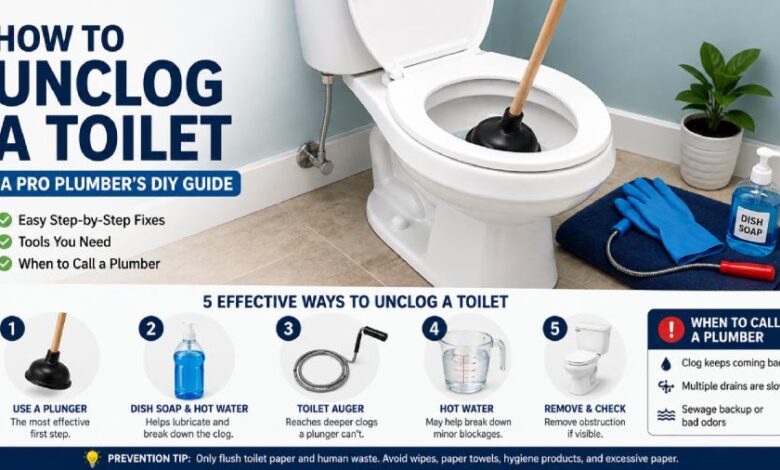
How to unclog a toilet is one of those skills every homeowner needs but nobody thinks about until water is rising toward the rim. The short answer: stop the water flow immediately, grab a flange plunger, and use firm, controlled strokes to push the blockage through the trap. Most household clogs clear in under five minutes with the right technique. But not every clog is a plunger job, and using the wrong approach can turn a simple fix into a flooded bathroom or a cracked toilet bowl. This guide walks through every reliable method — from basic plunging to using a toilet auger — along with the tools you actually need, what each fix costs, how to tell when a clog is beyond DIY, and how to keep your toilet from clogging in the first place.
What Causes a Toilet to Clog
Understanding why toilets clog helps you pick the right fix and avoid making the problem worse. The most common cause is simply too much toilet paper hitting the bowl at once, especially thicker multi-ply brands that don’t dissolve as quickly. Beyond that, flushing items that were never designed for plumbing — wet wipes (even those labeled “flushable”), cotton balls, Q-tips, dental floss, feminine hygiene products, and paper towels — accounts for a huge share of blockages because these materials don’t break down in water the way toilet paper does. Households with older low-flow toilets from the mid-1990s often see more frequent clogs because those early models lacked the flushing pressure to move solid waste through the trap effectively. Less obvious causes include a worn flapper valve inside the tank that doesn’t open fully (reducing flush power), a partially blocked plumbing vent on the roof that creates a vacuum in the drain line, mineral buildup narrowing the rim jets under the bowl, and even tree roots infiltrating the sewer lateral outside the house. If your toilet clogs once or twice a year, it’s likely a usage issue; if it happens every week, something structural may be going on deeper in the system.
Tools and Materials You Need Before You Start
Having the right gear within arm’s reach before you start saves you from scrambling through cabinets while water threatens to overflow. A flange plunger — the kind with a soft rubber extension folding out from the inside of the cup — is the single most important tool, and it outperforms the flat-bottom cup plungers that most people keep under the sink. Flange plungers cost $8 to $15 at any hardware store and create a far tighter seal against the curved drain opening at the bottom of a toilet bowl. Beyond the plunger, keep rubber gloves (shoulder-length if possible), old towels or rags for floor protection, a bucket for bailing excess water, liquid dish soap, and a toilet auger (also called a closet auger) on hand. A toilet auger runs $15 to $40 for a manual model and features a flexible steel cable inside a protective sleeve that prevents scratching the porcelain, which is a critical difference from a standard drain snake. If you only buy one backup tool beyond a plunger, the toilet auger is the one — it reaches about 3 to 6 feet past the bowl and handles anything a plunger cannot.
How to Stop a Toilet From Overflowing
Before you even think about clearing the clog, you need to stop water from spilling onto the floor. The moment you see the water rising after a flush, resist every urge to flush again — a second flush adds another full tank of water to a bowl that has nowhere to drain and virtually guarantees overflow. Instead, lift the tank lid off the back of the toilet and push the rubber flapper valve down firmly against the flush valve seat; this stops additional water from entering the bowl immediately. If water is still creeping up, reach for the small oval-shaped shutoff valve on the wall behind the toilet’s base and turn it clockwise until it stops. Shutoff valves that haven’t been turned in years can be stiff, so don’t force a corroded valve or you risk cracking the fitting — if it won’t budge, the flapper trick alone should buy you enough time. Once the water is under control, lay old towels around the base as a precaution and put on rubber gloves before touching anything inside the bowl.
Step-by-Step Guide to Unclog a Toilet With a Plunger
Plunging is the fastest and most effective fix for the vast majority of household toilet clogs, and getting the technique right makes all the difference between a 30-second fix and a 20-minute frustrating battle. Start by making sure there’s enough water in the bowl to submerge the plunger cup — if the bowl is nearly empty, pour in water from a bucket until the rubber cup can sit fully underwater, because air under the cup kills suction. Insert the flange plunger at an angle so the cup fills with water instead of trapping air, then press the extended flap into the drain opening to create a tight seal. Your first push should be slow and gentle; this purges any remaining air from the cup and locks the seal. After that first stroke, plunge vigorously with steady up-and-down motions for about 15 to 20 seconds, keeping the seal intact the entire time. You’ll feel the resistance change when the clog breaks — the plunger will suddenly pull forward on the downstroke, and you’ll hear water rushing down the drain. Pull the plunger out, let the bowl drain, and test with a single flush. If the water drains slowly but not completely, repeat the cycle two or three more times before moving to a different method. The whole process typically takes 1 to 5 minutes for a standard clog.
How to Unclog a Toilet Without a Plunger
Not everyone has a plunger available, and clogs have a habit of striking at the worst possible time — at a dinner party, in a guest bathroom, or in a rental with no tools in sight. The most reliable plunger-free method uses liquid dish soap and hot water. Squeeze roughly a quarter cup of dish soap directly into the bowl and let it sink to the bottom for 5 to 10 minutes; the soap acts as a lubricant that coats the clog and reduces friction against the pipe walls. While you wait, heat a gallon of water on the stove or from the tap to about the temperature of hot tea — not boiling, because pouring boiling water into a cold porcelain bowl risks cracking the ceramic due to thermal shock. Pour the hot water into the bowl from about waist height so the falling water adds gentle pressure, then wait another 15 to 20 minutes. In many cases, the combination of lubrication and heat softens the clog enough that a single flush clears it. If that doesn’t work, try the baking soda and vinegar approach: pour one cup of baking soda into the bowl, follow it slowly with two cups of white vinegar, let the fizzing reaction work for 30 minutes, and then add hot water. This method is better suited for organic clogs and may not help if a foreign object is lodged in the trap.
Using a Toilet Auger for Stubborn Clogs
When a plunger can’t move the blockage after several attempts, a toilet auger is the next step before calling a plumber, and it’s a tool worth owning rather than renting. A toilet auger works by physically reaching into the trap and either breaking apart the obstruction or hooking onto it so you can pull it back out. To use one, pull the cable back until the curved tip sits at the end of the protective sleeve, then lower the sleeve into the bowl until the tip rests against the drain opening. Crank the handle clockwise while applying gentle downward pressure — you’ll feel the cable navigating through the curved trap. When you hit resistance, keep cranking slowly; the auger head will either bore through the clog or snag whatever is causing the blockage. Once the resistance gives way, pull the auger out slowly and carefully — you may retrieve a wad of compacted toilet paper, a toy, or a clump of wipes. Run water into the bowl and flush to test. Unlike a standard drain snake, a toilet auger’s protective sleeve and rubberized tip are designed specifically to avoid scratching porcelain, so don’t substitute a bare drain snake unless you’re willing to accept cosmetic damage to the bowl. The entire process takes 5 to 15 minutes.
DIY vs Hiring a Professional Plumber
Knowing where DIY ends and professional plumbing begins saves you both money and potential property damage. If a plunger or toilet auger clears the clog and the toilet returns to normal flushing, you’re done — there’s no reason to call anyone. However, certain signs point to a problem that’s beyond what household tools can solve: water backing up into a bathtub or shower drain when you flush, gurgling sounds from other fixtures in the house, multiple toilets or drains clogging simultaneously, sewage odors rising from drains, or a toilet that re-clogs within hours of being cleared. These symptoms often indicate a blockage in the main sewer line rather than in the toilet’s own trap, and clearing a main line typically requires a motorized auger or hydro-jetting equipment that only a licensed plumber will have. Repeatedly forcing a plunger on a clog that won’t budge also carries risks — excessive plunging pressure can compromise the wax ring seal at the base of the toilet, leading to leaks that damage subflooring over time.
Estimated Costs for Unclogging a Toilet
The cost of dealing with a clogged toilet ranges from almost nothing to several hundred dollars, depending on whether you handle it yourself or bring in a professional. A quality flange plunger costs $8 to $15, and a manual toilet auger runs $15 to $40 — these are one-time purchases that handle the vast majority of household clogs for years. A bottle of dish soap and a pot of hot water cost essentially nothing. On the professional side, most plumbers charge $100 to $300 for a standard toilet unclogging visit, with the national average sitting around $150 to $250 for a straightforward job that a closet auger can handle on-site. If the blockage is deeper in the drain line and requires a motorized snake or camera inspection, expect $250 to $500. Hydro-jetting a sewer line — which blasts high-pressure water through the pipe to clear grease, roots, and mineral buildup — typically runs $350 to $800 depending on the length and condition of the line. Emergency or after-hours calls add $50 to $150 on top of the base rate. Prices vary significantly by region, so requesting quotes from at least two local plumbers before scheduling non-emergency work is a smart move.
Common Mistakes That Make Toilet Clogs Worse
Several well-meaning reactions to a clogged toilet actually escalate the problem, and avoiding them is just as important as knowing the correct fix. The biggest mistake is flushing a second time hoping the extra water will push the clog through — all this does is overfill the bowl and flood the bathroom floor with contaminated water. Using a flat cup plunger instead of a flange plunger is another frequent error; cup plungers are designed for flat drain openings like sinks and tub drains and cannot form a proper seal in the curved outlet of a toilet bowl, so you end up splashing dirty water around without generating any real pressure on the clog. Pouring boiling water directly into the bowl is risky because the thermal shock can crack porcelain, especially in older toilets or during cold weather when the ceramic is already cool. Chemical drain cleaners marketed for toilets are a poor choice — they rarely dissolve the organic material causing the clog, they can damage the wax ring seal and internal toilet components with repeated use, and they create a hazard if you later need to plunge (splashing caustic chemicals onto skin or eyes). Finally, using a standard drain snake without a porcelain guard will almost certainly leave scratches inside the bowl that are permanent and attract staining over time.
How to Prevent Toilet Clogs
Preventing clogs is simpler and cheaper than fixing them, and a few habit changes can eliminate most blockages entirely. The most impactful rule is to flush only human waste and toilet paper — everything else belongs in the trash can, including so-called flushable wipes, which independent testing has repeatedly shown do not break down like toilet paper and are a leading cause of residential and municipal sewer blockages. If you use a lot of toilet paper, flush once partway through and once at the end rather than letting a large amount accumulate in the bowl. Keep the toilet lid closed when not in use, especially in homes with small children — toys, hairbrushes, and other small objects falling into the bowl account for a surprising number of plumber calls. Inside the tank, check the flapper valve every 6 to 12 months; a deteriorated flapper that doesn’t open fully reduces flush pressure and makes clogs more likely. Clean the rim jets under the lip of the bowl periodically with a small brush or a bent piece of wire to remove mineral deposits that reduce water flow into the bowl during a flush. For homes on older sewer lines or properties with large trees near the lateral, scheduling a professional drain cleaning or camera inspection once every 1 to 2 years can catch root intrusion or pipe deterioration before it causes a full blockage.
When to Call a Professional Plumber
There’s a clear line between a routine clog you can fix yourself and a plumbing issue that requires licensed help, and crossing that line with DIY methods risks making things significantly worse. Call a plumber if you’ve plunged vigorously for several minutes and used a toilet auger without any improvement — at that point, the blockage is likely beyond the toilet’s built-in trap and sits deeper in the branch drain or main sewer line where household tools simply cannot reach. Multiple fixtures draining slowly or backing up at the same time is a strong indicator that the problem is in the main line, not the toilet itself. Sewage odors coming from floor drains or other fixtures suggest a venting issue or a partial sewer line collapse that needs camera inspection to diagnose. If your toilet clogs repeatedly — more than once a month despite proper usage habits — there may be a structural issue such as a bellied pipe (a section that has sunk and collects waste), root intrusion, or a toilet with an undersized trapway that simply can’t handle normal household use. A professional with a motorized auger and drain camera can pinpoint the exact cause in about 30 to 60 minutes and recommend a targeted fix rather than a guess-and-check approach.
Conclusion
A clogged toilet is one of the most common and fixable plumbing problems in any home, and knowing how to unclog a toilet properly means you can handle the vast majority of blockages yourself in under 10 minutes with a $10 plunger. The key steps stay the same every time: stop the water immediately, use a flange plunger with proper technique, and escalate to a toilet auger or the hot water and dish soap method only if plunging doesn’t work. Keep your tools accessible, flush only waste and toilet paper, and pay attention to warning signs like recurring clogs or slow drains in multiple fixtures. When those signs appear, calling a licensed plumber early costs far less than dealing with water damage, sewage backup, or a collapsed pipe later. A little prevention and the right response in the first 60 seconds make all the difference between a quick fix and a bathroom disaster.
Also read: How to Reseal Windows: Step-by-Step Guide, Costs, and Common Mistakes
FAQs
Can I use chemical drain cleaner to unclog a toilet?
Chemical drain cleaners are not recommended for toilets because they rarely dissolve organic clogs effectively and can damage the wax ring, internal seals, and porcelain with repeated use. A plunger or auger is safer and more effective.
How long should I plunge before trying something else?
Give a flange plunger 3 to 5 focused plunging sessions of about 15 to 20 seconds each. If the clog hasn’t moved after roughly 5 minutes of consistent effort, switch to a toilet auger or hot water method.
Will a toilet unclog itself if I wait long enough?
Some organic clogs caused by excess toilet paper may dissolve over several hours as the paper softens in standing water. However, clogs caused by foreign objects, wipes, or compacted waste will not clear on their own.
Is it safe to pour boiling water into a toilet bowl?
No — boiling water can crack porcelain due to thermal shock, especially in older or cold toilets. Use hot tap water or water heated to roughly 150°F, which is warm enough to soften clogs without risking damage.
What is the difference between a toilet auger and a drain snake?
A toilet auger has a protective rubber or plastic sleeve that prevents scratching the porcelain inside the bowl, while a standard drain snake has an exposed metal cable designed for pipes accessed through cleanouts, not toilets.
How often should I have my drains professionally cleaned?
Most plumbers recommend professional drain cleaning every 1 to 2 years for standard households, and annually for homes with older pipes, large trees near sewer lines, or a history of frequent clogs.