
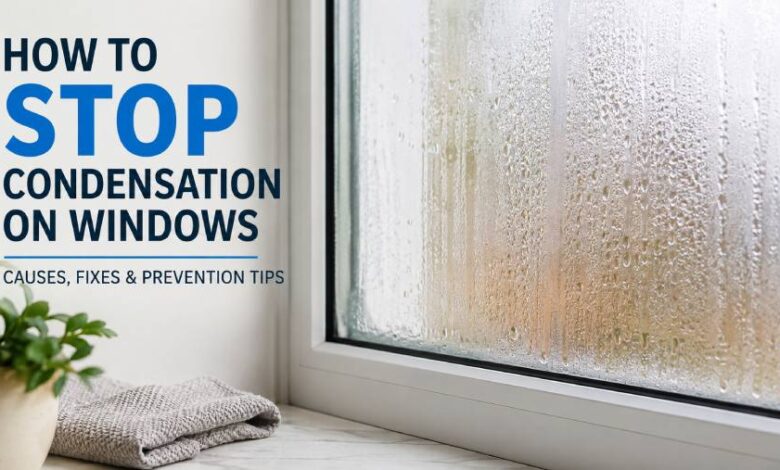
How To Stop Condensation On Windows starts with controlling indoor humidity and improving airflow around cold glass. When warm, moisture-filled indoor air meets a window surface below its dew point, water forms on the glass; the most reliable approach is therefore to reduce excess moisture, ventilate moisture-producing rooms, keep air moving across the glass, and improve the window’s thermal performance where necessary.
What Causes Condensation On Windows?
Condensation occurs when humid indoor air reaches a surface cold enough for the air’s water vapor to turn into liquid water, which is why droplets commonly appear on windows during cold weather. The window itself is not necessarily leaking: the glass may simply be colder than the surrounding room air, particularly with single-pane or poorly insulated windows. Everyday activities such as showering, cooking, washing dishes, drying clothes indoors, and even breathing add moisture to the air. The U.S. Environmental Protection Agency recommends keeping indoor relative humidity below 60%, ideally around 30% to 50%, while ENERGY STAR explains that interior condensation forms when the window surface falls below the dew point of humid indoor air.
How To Tell Where The Moisture Is Coming From
Before changing the windows, identify whether the water is on the room-facing glass, outside the window, or between sealed panes because each situation has a different cause. Condensation on the inside usually points toward indoor humidity combined with a cold glass surface, while condensation on the exterior can occur during warm, humid weather when air conditioning makes the outside glass cooler than the outdoor dew point. Moisture trapped between double-glazed panes is different again and can indicate failure of the insulating glass unit’s seal rather than excessive household humidity. Persistent water around the frame, wall, sill, or surrounding trim should also be investigated because it may represent a leak or installation problem rather than ordinary condensation.
Reduce Indoor Humidity Before Replacing Your Windows
The first practical step in learning How To Stop Condensation On Windows is to measure humidity rather than guessing. A digital hygrometer can show relative humidity in each affected room, and keeping indoor RH around 30% to 50% is a useful general target, although the appropriate level can vary with outdoor temperature and building conditions. If readings remain high, reduce moisture at its source by using bathroom and kitchen exhaust fans that discharge outdoors, venting clothes dryers outdoors, limiting indoor clothes drying where possible, and using air conditioning or a dehumidifier when appropriate. The EPA specifically identifies condensation on windows as a possible sign of excessive humidity and recommends reducing moisture while drying wet surfaces promptly.
Improve Ventilation In Bathrooms, Kitchens, And Bedrooms
Ventilation removes moisture before it spreads through the house, making it one of the most effective low-cost measures for recurring condensation. Run the bathroom exhaust fan while showering and continue using it afterward; ENERGY STAR recommends leaving kitchen and bathroom fans running for about 20 minutes after cooking or showering. Kitchen and bathroom fans should discharge outdoors rather than into an attic or another enclosed space, because simply moving humid air elsewhere does not solve the moisture problem. If outdoor conditions are suitable, briefly opening windows can also exchange humid indoor air for drier outdoor air, but opening windows is not automatically beneficial during hot, humid weather because outdoor air may contain substantial moisture. Current GOV.UK ventilation guidance similarly emphasizes that showering, cooking, washing dishes, drying clothes, and normal breathing all contribute moisture that ventilation needs to remove.
Keep Warm Air Moving Across The Glass
Once humidity is under control, improve the temperature and airflow at the window itself. Keep curtains and blinds positioned so they do not prevent warm room air from reaching the glass, and avoid creating a stagnant pocket of cold air between heavy window coverings and the pane. Furniture placed directly against exterior walls or in corners can also restrict circulation. ENERGY STAR recommends window treatments that allow airflow across the window surface, while the EPA recommends increasing air movement and raising the temperature of cold surfaces where condensation occurs. In a particularly troublesome room, gentle air circulation from a fan can help distribute warm air, but it should be treated as a supporting measure rather than a substitute for humidity control.
Reduce Moisture From Everyday Household Activities
A surprising amount of window moisture can be traced to normal household routines rather than a defective window. Keep bathroom doors closed during showers so steam does not migrate into colder rooms, use the kitchen extractor while boiling or steaming food, cover pots when practical, and avoid drying large amounts of wet laundry in poorly ventilated rooms. If clothes must be dried indoors, increase ventilation and consider dehumidification rather than allowing moisture to accumulate throughout the home. Also investigate less obvious sources such as humidifiers, plumbing leaks, damp basements, or combustion appliances that are not properly vented. EPA guidance specifically identifies cooking, showering, drying clothes, humidifiers, leaks, and other moisture sources as contributors to indoor humidity and condensation.
Improve Window Insulation When Humidity Is Not The Whole Problem
If indoor humidity is reasonable but condensation continues, the glass may simply be too cold. Single-pane windows are particularly vulnerable because the interior surface can become close to outdoor temperatures, while better-insulated glazing keeps the inside surface warmer. ENERGY STAR notes that condensation resistance is improved by appropriate window design and installation, and recommends insulating the space between the window frame and rough opening during installation. Storm windows, improved glazing, properly sealed frames, and replacement windows can all reduce the likelihood of condensation by increasing interior surface temperature. However, replacing windows should not be the first response to every wet pane: if indoor RH is high, a new window may reduce the symptom without correcting the underlying moisture problem.
When Does Fixing Or Replacing A Window Make Sense?
Professional investigation becomes worthwhile when condensation remains severe despite reasonable humidity and ventilation control, when moisture is trapped between double-glazed panes, or when you find drafts, water staining, damaged frames, failed seals, or signs of water entering around the opening. Current 2026 U.S. cost data from Angi places general window repairs at roughly $70 to $1,700, with an average around $405, while full replacement commonly runs about $300 to $2,500 per window depending on material, size, style, installation, and location. Glass replacement alone can be substantially less expensive in some situations, with HomeAdvisor reporting a typical professional glass-replacement range of about $181 to $413 per window. These are U.S. reference ranges, not guaranteed quotes; local labor, window type, accessibility, and the extent of damage can change the final price considerably.
DIY Fixes, Tools, And Safety Considerations
Most humidity-control measures are suitable DIY work because they involve monitoring humidity, operating existing ventilation, improving airflow, drying wet surfaces, and maintaining equipment according to manufacturer instructions. A basic digital hygrometer, microfiber cloth, fan, and appropriately sized dehumidifier can help diagnose and manage the problem without modifying the window. More involved work such as replacing sealed glass units, altering window frames, working from ladders at height, modifying electrical exhaust fans, or replacing windows should be approached more cautiously. If a home was built before 1978 in the United States, window replacement can disturb lead-based paint, and ENERGY STAR advises following EPA lead-safe practices; electrical work should likewise be handled by a qualified professional where required.
Common Mistakes That Keep Window Condensation Coming Back
One common mistake is repeatedly wiping the glass without reducing humidity, because removing droplets treats the visible symptom rather than the moisture source. Another is running an exhaust fan that vents into an attic or cavity, which can relocate moisture instead of removing it outdoors. Blocking radiators or warm-air circulation with tightly closed curtains can keep the glass colder, while relying on a dehumidifier without checking why humidity is unusually high can conceal leaks or inadequate ventilation. Do not paint over damp or moldy surfaces before correcting the moisture problem, because EPA guidance recommends fixing the underlying water source and drying affected materials first. If condensation suddenly becomes much worse, appears in previously unaffected rooms, or is accompanied by stains, peeling finishes, musty odors, or visible mold, investigate the building rather than assuming it is ordinary seasonal condensation.
Conclusion
How To Stop Condensation On Windows is primarily a moisture-control and temperature-management problem, not simply a matter of wiping the glass every morning. Start by measuring indoor humidity, reduce moisture from showers, cooking and laundry, make sure exhaust fans discharge outdoors, improve airflow around cold glass, and then assess the window’s insulation or condition if condensation persists. These steps address the cause in the correct order and can prevent prolonged moisture from damaging frames, finishes, walls, and furnishings. When condensation occurs between sealed panes or remains severe despite controlled humidity and proper ventilation, a qualified window professional can determine whether repair, glass-unit replacement, improved installation, or complete window replacement is justified.
Also read: Room Divider Ideas: Costs, DIY Options, and What Actually Works Best
FAQs
Why do my windows get condensation overnight?
Condensation often increases overnight because indoor moisture accumulates while windows cool, allowing humid air to reach its dew point on colder glass surfaces.
Does a dehumidifier stop window condensation?
A dehumidifier can reduce condensation when excessive indoor humidity is the main cause, although it cannot correct failed window seals, leaks, or extremely cold glass.
What humidity level prevents condensation on windows?
The EPA recommends indoor relative humidity below 60%, ideally between 30% and 50%, although colder outdoor conditions may require lower humidity.
Should I open windows to stop condensation?
Opening windows can reduce humidity when outdoor air is sufficiently dry, but it may worsen moisture problems during hot, humid weather.
Is condensation between double-glazed windows a problem?
Yes. Moisture trapped between sealed panes can indicate insulating-glass seal failure, which usually requires professional assessment rather than household humidity control.
Can condensation damage window frames?
Persistent moisture can damage window components and surrounding surfaces and can create conditions that support mold and mildew growth.