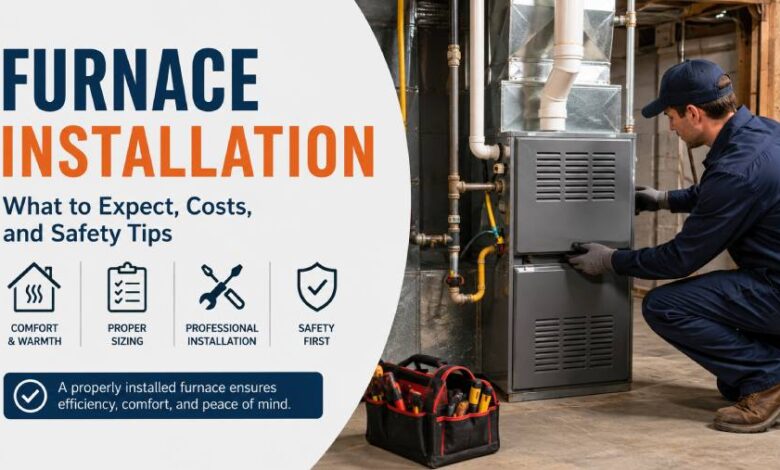
Furnace Installation typically costs about $2,823 to $6,897 for a new residential furnace, although difficult replacements, high-efficiency equipment, ductwork changes, permits, and local labor can push the total higher. The right installation starts with accurate heating-load calculations rather than simply matching the old unit, followed by proper equipment selection, duct and venting checks, electrical and fuel connections, commissioning, and safety testing.
What Is Furnace Installation and What Does It Include?
Furnace installation is the process of replacing or adding a forced-air heating appliance and connecting it correctly to the home’s ductwork, thermostat, electrical supply, and, for fuel-burning models, the fuel and venting systems. A complete residential installation can involve removing the existing furnace, evaluating the supply and return ducts, calculating the home’s heating load, selecting appropriately sized equipment, connecting the new unit, configuring controls, checking airflow, verifying combustion and venting on fuel-burning equipment, and commissioning the system. A professional installation is more than setting a furnace in the same location as the old one because the replacement must work safely and correctly with the home’s existing HVAC system. ACCA’s Manual J is the recognized residential load-calculation standard used to determine heating and cooling loads, while related ACCA procedures address equipment selection and system design.
How Much Does Furnace Installation Cost?
The typical cost of a new furnace installation is approximately $2,823 to $6,897, according to 2026 cost data from Angi, but that range should be treated as a broad national benchmark rather than a guaranteed quote. Gas furnace installations can average around $5,500, with higher-efficiency or more complicated projects reaching substantially more, while electric furnace installation costs vary widely depending on equipment, electrical requirements, and existing ductwork. The final price can include the furnace itself, labor, removal and disposal of the old equipment, permits, thermostat work, venting modifications, ductwork repairs, electrical upgrades, and other installation materials. Location matters because HVAC labor rates and permit requirements differ significantly between markets, so homeowners should compare written estimates that describe exactly what is included rather than choosing a contractor based only on the lowest advertised price.
What Determines the Size of a New Furnace?
Furnace size should be determined from the home’s actual heating load rather than square footage alone, because insulation, windows, air leakage, ceiling height, climate, building orientation, and other characteristics affect how much heat the home requires. ACCA’s Manual J procedure is specifically designed to calculate residential heating and cooling loads, and proper sizing helps avoid the problems associated with equipment that is unnecessarily large or otherwise poorly matched to the building and duct system. During a professional assessment, the contractor should examine the home’s construction and existing HVAC configuration before recommending a capacity. A larger furnace is not automatically better: an improperly selected system can create comfort, airflow, cycling, and efficiency problems, while an undersized system may struggle to maintain the desired indoor temperature during demanding weather.
What Happens During Furnace Installation?
A typical installation begins with an inspection of the existing heating system and a review of the home’s heating requirements, followed by safe shutdown and removal of the old equipment when replacement is involved. The contractor then prepares the installation area, checks the supply and return air connections, positions the new furnace, connects ductwork, installs or modifies venting where required, and makes the necessary electrical, thermostat, and fuel connections. After the physical installation, the technician starts and tests the system, verifies airflow and controls, checks combustion and venting on fuel-burning equipment, and confirms that safety controls operate correctly. The exact sequence varies by furnace type and the existing installation, and a replacement that requires new ductwork, venting, gas piping, electrical work, or structural changes can take considerably longer than a straightforward equipment swap.
How Long Does Furnace Installation Take?
A straightforward furnace replacement commonly takes several hours to a full working day, but there is no single installation time that applies to every home. A simple replacement using compatible existing ductwork, electrical connections, thermostat wiring, and venting can be relatively quick, while a new installation or complicated replacement may take longer because the contractor may need to modify ducts, install new venting, alter gas piping, upgrade electrical components, or address code requirements. The condition and accessibility of the mechanical room also matter. Homeowners should ask the contractor for an expected completion window before work starts and confirm whether the quoted labor includes removal of the old unit, startup testing, permit-related work, and cleanup.
Gas, Electric, and Oil Furnaces: Which Is Right?
Gas, electric, and oil furnaces have different installation requirements and operating considerations, so the best choice depends on fuel availability, climate, existing infrastructure, equipment efficiency, and local energy prices rather than one universal ranking. Natural-gas, propane, and oil furnaces burn fuel and therefore require appropriate combustion air and safe venting, while electric furnaces do not produce combustion gases but can require substantial electrical capacity. ENERGY STAR’s current furnace criteria, for example, distinguish efficiency requirements for gas and oil equipment, with certified gas furnaces generally rated at 90% AFUE or higher in the South and 95% or higher in the North, while qualifying oil furnaces are rated at 85% AFUE or higher. AFUE represents the percentage of fuel energy converted into useful heat over a heating season, but a high rating alone does not guarantee lower total costs because installation quality, local energy prices, equipment sizing, and usage all matter.
Should You Replace the Furnace or Consider a Heat Pump?
A furnace replacement is not automatically the best solution when an older heating system reaches the end of its service life, particularly when the homeowner is also considering a major HVAC upgrade. A heat pump can provide heating and cooling from the same basic system and may be worth evaluating based on local climate, electricity and fuel prices, existing ductwork, equipment compatibility, and available utility incentives. However, the economics are highly location-specific, so a contractor should compare expected operating costs and installation requirements rather than making a blanket claim that one technology is always cheaper. Federal tax rules have also changed: the IRS says the Energy Efficient Home Improvement Credit under Section 25C does not apply to qualifying property placed in service after December 31, 2025, although state, utility, and other local incentives may still exist.
Can You Install a Furnace Yourself?
DIY furnace installation is generally not an appropriate project for an inexperienced homeowner because it can involve gas or propane, high-voltage electrical equipment, combustion, carbon monoxide, venting, and safety controls. Even when the physical equipment appears straightforward, incorrect gas connections, inadequate venting, improper combustion-air arrangements, electrical mistakes, or incorrect startup procedures can create serious hazards. CPSC recommends that fuel-burning home heating systems be professionally inspected annually and warns consumers not to service fuel-burning appliances without the necessary knowledge, skills, and tools. A homeowner can reasonably handle low-risk maintenance such as checking the thermostat, keeping return-air grilles unobstructed, and replacing the filter according to manufacturer guidance, but installation, fuel connections, combustion testing, and electrical work should be left to appropriately qualified professionals.
What Safety Checks Matter After Installation?
Safety testing is one of the most important parts of furnace installation because a properly operating furnace must deliver heat without creating unsafe combustion, electrical, or airflow conditions. For a gas or oil furnace, the technician should verify that the combustion system and venting are functioning correctly and that combustion products are safely discharged from the home. CPSC recommends annual professional inspection of fuel-burning heating equipment and specifically calls for attention to chimneys, flues, vents, blockages, corrosion, loose connections, and disconnections. Carbon monoxide is colorless and odorless, so homeowners should not rely on smell as a warning system; functioning carbon monoxide alarms should be installed and maintained according to their manufacturer’s instructions and applicable local requirements.
How Do You Maintain a Newly Installed Furnace?
Regular maintenance begins with keeping the furnace filter clean and using a filter that the system can accommodate without creating excessive airflow resistance. EPA explains that MERV ratings describe a filter’s ability to capture particles and recommends choosing the highest-rated filter the system fan and filter slot can properly accommodate rather than automatically installing the most restrictive filter available. Filter replacement intervals vary by filter type, system operation, household conditions, and manufacturer instructions, so a fixed three-month rule should not be treated as universal. Fuel-burning heating equipment should also receive professional inspection and service annually, particularly before or during the heating season, with the technician checking the furnace and associated venting and safety components.
What Furnace Installation Mistakes Should You Avoid?
The most expensive installation mistakes are often decisions made before the equipment is installed: choosing capacity from square footage alone, accepting an estimate without checking what it includes, ignoring deteriorated ductwork, overlooking return-air limitations, or selecting equipment solely because it has a high efficiency rating. Other problems can arise when contractors reuse incompatible venting, fail to address airflow restrictions, skip proper commissioning, or leave the homeowner without documentation for the installed equipment. A good estimate should identify the furnace model or efficiency class, installation scope, labor, removal, permits where applicable, duct or vent modifications, thermostat work, warranty coverage, and startup testing. The homeowner should also receive manufacturer documentation and understand filter access, thermostat operation, maintenance requirements, and who to contact if the system develops a problem after installation.
When Should You Call a Furnace Professional?
Call a qualified HVAC professional when the furnace will not start, repeatedly shuts down, produces unusual combustion-related symptoms, creates abnormal odors, trips electrical protection, makes persistent mechanical noises, or cannot maintain comfortable temperatures despite normal thermostat settings and unobstructed airflow. A homeowner should never attempt to diagnose or repair a suspected gas leak, damaged heat exchanger, combustion problem, or dangerous electrical fault by trial and error. If a carbon monoxide alarm activates, treat it as a safety issue rather than a routine furnace problem: leave the affected area as appropriate and follow the alarm manufacturer’s emergency instructions and local emergency guidance. For routine replacement, obtaining multiple detailed estimates is worthwhile because installation quality, sizing, duct compatibility, venting, warranty terms, and included work can matter as much as the equipment’s advertised price.
Conclusion
Furnace installation is a major home-comfort decision, and the best result comes from treating the project as a complete HVAC system upgrade rather than simply replacing one metal cabinet with another. Start with an accurate heating-load calculation, choose equipment that matches the home’s requirements and existing ductwork, compare detailed installation estimates, and make sure fuel connections, electrical components, venting, controls, airflow, and safety systems are properly commissioned. For fuel-burning equipment, professional installation and annual inspection are especially important because carbon monoxide and combustion hazards cannot be managed safely through guesswork.
Also read: Jacuzzi Bath Remodel: Cost, Reviews, Process, and Is It Worth It?
FAQs
How much does furnace installation cost?
A new furnace installation typically costs $2,823 to $6,897 nationally, but equipment type, location, labor, permits, ductwork, and installation complexity can change the final price.
How long does furnace installation take?
A straightforward replacement often takes several hours to one day, while complicated installations involving ductwork, venting, electrical changes, or new infrastructure can take longer.
What size furnace does my house need?
Furnace size should be determined through a heating-load calculation rather than square footage alone, considering insulation, windows, climate, air leakage, and building characteristics.
Can I install a gas furnace myself?
Gas furnace installation should be performed by a qualified professional because incorrect fuel connections, combustion, electrical work, or venting can create fire or carbon monoxide hazards.
How often should a furnace be serviced?
CPSC recommends professional inspection and service of fuel-burning home heating systems annually, including checks of furnaces, chimneys, flues, vents, and related components.
Is a high-efficiency furnace worth the extra cost?
A high-efficiency furnace can reduce fuel consumption, but its value depends on equipment cost, climate, heating demand, energy prices, sizing, installation quality, and expected years of ownership.